Go back
  February 27 2026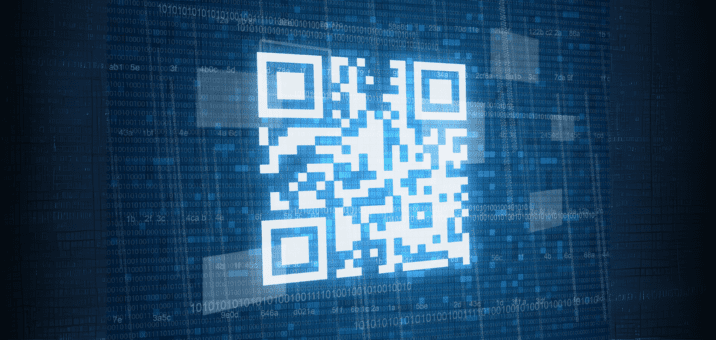
Smart industrial interfaces – integrating QR codes, NFC and LEDs into membrane keyboards
Modern industrial interfaces are much more than traditional button-based keyboards. At Qwerty, we transform them into intelligent communication systems by integrating advanced electronic components directly into the structure of membrane keyboards. This approach makes it possible to create compact solutions that combine control, identification and signaling functions within a single device.
Our advanced technologies for integrating electronics into flexible surfaces enable us to offer interfaces with built-in QR codes, NFC modules and LED systems. These seemingly small additions fundamentally change how industrial control systems operate.
QR code technology embedded in the membrane structure
Printing QR codes directly onto the membrane keyboard surface is a technology we continuously develop and refine. Unlike adhesive labels, our QR codes are an integral part of the graphic layer of the interface, produced using the same technology as the button graphics.
Industrial-grade durability
The use of specialized ceramic inks guarantees long-term readability of the QR code throughout the keyboard’s entire service life. Intensive cleaning with industrial agents, exposure to UV radiation and mechanical abrasion do not affect the code’s functionality. Our laboratory tests confirm readability even after thousands of industrial cleaning cycles.
Practical applications
Each QR code can store up to 4,000 characters of information, allowing complete device documentation to be embedded. A production line operator scans the code and instantly gains access to operating instructions, technical parameters and service history. A service technician has immediate access to wiring diagrams and spare parts lists.
Maintenance departments in large plants particularly value this solution. Instant access to technical documentation significantly shortens response times – technicians no longer need to search through binders or databases; everything is available on a smartphone.
NFC modules in daily operation
Integrated NFC (Near Field Communication) modules open up new possibilities for access management and process automation. Unlike QR codes, NFC enables two-way communication and can be reprogrammed in real time.
Integration with management systems
Keyboards equipped with NFC modules automatically recognize authorized users when they present a company card or smartphone. The system can then adapt the interface to the user’s permission level – from basic functions for production workers to advanced diagnostic options for engineers.
Security and access control
NFC technology also enables encrypted storage of configuration data directly in the keyboard. Machine settings can be transferred between workstations by simply tapping an NFC card on the interface. This is especially useful in serial production, where different product variants require different technological parameters.
LEDs integrated into flexible surfaces
Traditional signal lamps take up additional space and require separate mounting holes. An alternative solution is to integrate LEDs directly into the membrane keyboard structure, allowing for significant space savings and simplified mechanical design.
Printed conductive track technology
This process uses special conductive inks to create precise electrical traces on the membrane surface. LEDs are mounted using surface-mount technology (SMT) and protected with a transparent protective coating. The entire structure retains the flexibility characteristic of membrane keyboards.
Multicolor status indication
Each LED can emit different colors to indicate machine status or process progress. Red signals an alarm, green indicates normal operation, and blue shows standby mode. Programmable brightness allows the light intensity to be adjusted to changing lighting conditions on the production floor.
Modern LEDs offer a service life exceeding 50,000 hours while maintaining original brightness. Proper construction protects them against moisture, dust and vibrations typical of industrial environments.
The power of all technologies in a single interface
The real power of innovation emerges when all these technologies are combined within one interface. A keyboard with an integrated QR code, NFC module and LED indicators becomes an autonomous communication hub between humans and machines.
Imagine an operator tapping an NFC card to the keyboard – the system automatically loads their user profile and adapts the interface functions. LEDs indicate machine readiness. At the end of the shift, the operator scans the QR code to submit a production report. All data is automatically transferred to the plant management system.
In such a scenario, integration eliminates the need for separate NFC readers, signal lamps or barcode scanners. One interface replaces several devices, simplifying wiring and reducing the risk of failure.
Qwerty on the path to smart interfaces of the future
Integrating electronic components into membrane keyboards is only the beginning. The future may bring solutions that combine interfaces with augmented reality systems and AI-based analytics platforms.
We anticipate the next step will be adaptive interfaces that automatically adjust to the operator’s preferences and experience level. Combining biometric sensors with machine learning algorithms will enable personalized work environments in which the keyboard itself suggests optimal settings or reminds users of safety procedures. Such solutions can significantly reduce operator errors and increase production efficiency, especially in high-precision processes.
Already today, by combining the traditional durability of our keyboards with modern communication technologies, we create interfaces that not only control machines but also actively support operators in decision-making. This is the natural evolution of industrial control systems toward fully digital factories and smart interfaces of the future.