Go back
  February 23 2026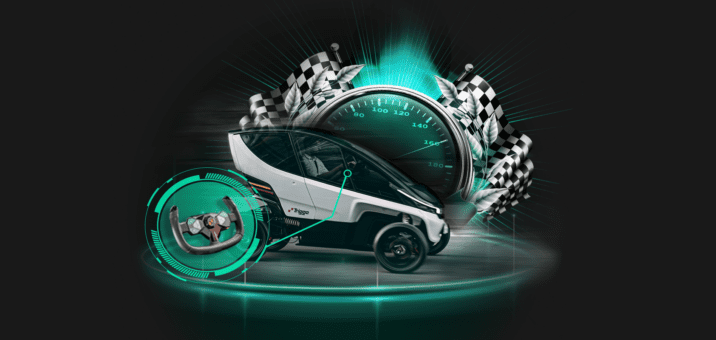
Triggo is a Polish electric microcar, designed specifically to address the key challenges of modern metropolises – congested streets, limited parking availability, and the growing need for sustainable urban transport. This vehicle represents a new category of urban mobility, combining practical features of both a motorcycle and a car.
The precisely designed Triggo control interface was developed by Qwerty. Our specialized membrane keyboards, integrated directly into the vehicle’s steering wheel, are a key element enabling intuitive control of all Triggo functions. In this article, we explain how our technological solutions contributed to creating an efficient and user-friendly control system for this unique vehicle.
The role of Qwerty keyboards in the Triggo control system
When designing the control interface for Triggo, we had to completely rethink how the driver interacts with the vehicle. Our work focused on creating a solution that combines quality, intuitive operation, and user safety.
The Triggo steering wheel differs significantly from traditional car solutions. Instead of a round wheel, a flattened U-shaped grip is used, which posed a unique design challenge. Our engineering team developed specialized membrane keyboards, ergonomically placed on the left and right arms of the steering wheel. This solution allows the driver to operate the most important vehicle functions without taking their hands off the controls.
Particular attention should be paid to the button responsible for changing the wheel track width. A single press causes Triggo to switch from road mode to maneuvering mode within just 2 seconds by folding the front wheels inward and reducing the vehicle’s width. This function allows the vehicle’s characteristics to be quickly adapted to current traffic conditions – both when navigating traffic jams and when parking in tight spaces.
The remaining buttons allow control of lighting, turn signals, the horn, and the automatic doors, which open after pressing the appropriate key. This thoughtful layout ensures that all essential functions are literally at the driver’s fingertips, significantly improving comfort and safety while driving.
What design solutions did we use?
Developing advanced control interfaces for Triggo required the use of specialized technologies and materials to ensure reliable operation in various conditions. Here are the solutions we implemented:
Durable membrane keyboards
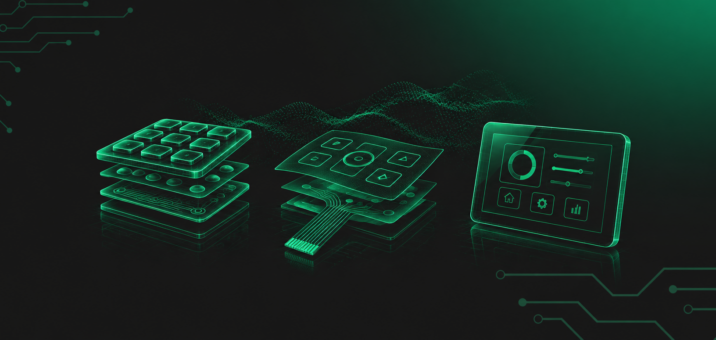
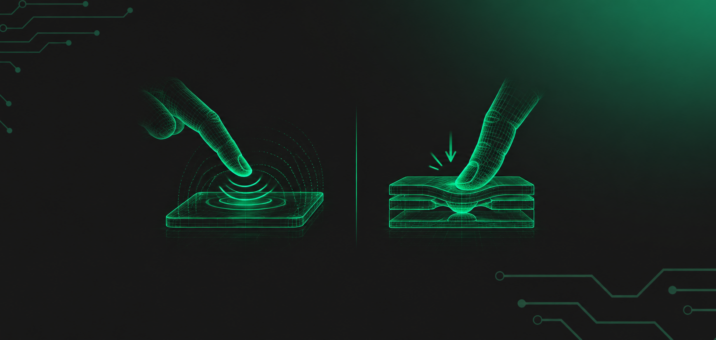
The keyboards created specifically for Triggo are technologically advanced membrane panels that meet strict automotive industry standards. Their design is based on a multi-layer film structure with precisely printed conductive paths and a damage-resistant top layer. The printed symbols feature high resistance to abrasion and fading, even under intensive use.
The entire structure is hermetically sealed, ensuring a high level of protection against external factors in accordance with IP standards. Our keyboards effectively resist dust, moisture, and changing weather conditions. This durability allows Triggo to be used reliably regardless of the weather – during rain or under significant temperature fluctuations.
To protect the panels from electromagnetic interference and electrostatic discharge (ESD), we used specialized shielding of the conductive layers. This is particularly important in an electric vehicle, where proximity to motors and other electronic components can generate interference. Thanks to these protections, our keyboards maintain full functionality under all operating conditions.
Precision and durability
Each control panel undergoes thorough testing at various stages of the production process. Both basic functionality and resistance to vibration and mechanical loads are verified. During assembly, we use specialized adhesives and precise mechanical fitting, which guarantees a durable connection between the panels and the steering wheel, even under intensive vehicle use.
This approach reflects Qwerty’s philosophy – we focus on every detail to deliver products with the highest quality parameters. Our attention to detail translates directly into the long-term durability of the control interfaces.
Safety and ergonomics at the core
We assumed that in automotive projects there is no room for compromise, especially when it comes to safety. Our keyboards were designed to minimize driver distraction. The button layout follows ergonomic principles, and operation does not require taking your eyes off the road.
We also used LED or electroluminescent (EL) backlighting, which subtly highlights the symbols on the keys, making them easier to locate in low-visibility conditions. This gentle, even illumination allows the driver to quickly find the required button even after dark, which is a significant advantage in a dynamic urban environment.
Qwerty and Triggo cooperation – synergy of experience and innovation
Triggo is an example of Polish innovative engineering, and Qwerty keyboards are a technological component that enables effective use of this vehicle’s potential. Thanks to our solutions, drivers gain comfort, safety, and full control over a microcar that can transform urban mobility.
We are proud that our experience and commitment to creating modern interfaces have found practical application in this pioneering project. The future of transport is heading towards electrification and sustainable solutions – and we are ready to actively participate in this process by delivering precise and reliable control interfaces for future generations of innovative vehicles.