Go back
  March 9 2026
 There is no “reset” button in the air. A paraglider pilot relies on experience, weather conditions, and data from instruments. Altitude, climb rate, wind direction and strength, a programmed landing point — everything must be clear and instantly accessible. And before it appears on the screen, it has to be set.
That’s where the keyboard comes in. And that’s where responsibility begins.
For years we have collaborated with Syride, a manufacturer of flight instruments for paragliders, designing and delivering keypads for devices such as Syride One, Syride XL, and Syride Evo V2. Each represents a different design philosophy. Each requires a different engineering approach. Yet the foundation remains the same: reliability in the real environment of flight.
Syride One – minimalism without a margin for error
Syride One is a compact wrist-mounted device. Small, lightweight, attached directly to the pilot’s arm. In such a design, every millimeter of space matters.
Designing a keypad for a device like this means working on a microscale. The buttons must be tactile even when used with gloves, yet resistant to accidental activation. The panel must maintain a high IP sealing level, because during flight nobody hides their equipment from the rain.
In this class of devices there is no room for “good enough.” There is only precision and repeatability.
Syride XL – a market standard that must endure everything
The Syride XL model is now one of the most popular standards among pilots. A larger display, more functions, and greater exposure to environmental conditions.
Here another key factor comes into play: readability in bright sunlight. Altimeters are often used under full sun — in open spaces, mountains, and regions with very intense UV radiation.
That is why the keypad must work together with a crystal-clear display window that:
- ensures high light transmission
- does not degrade under UV exposure
- does not become cloudy over time
- resists micro-scratches
Material degradation is not just an aesthetic issue. It creates the risk of reduced contrast and decreased readability of flight parameters — which directly affects safety.
Syride Evo V2 – larger format, greater responsibility
Syride Evo V2 is a more advanced instrument — a larger display, a more complex interface, and a design approaching the premium segment.
In devices of this class, the keypad is no longer just an accessory. It becomes an integrated element of the entire device front. It requires precise fitting, structural stability, and resistance to shock.
Paragliding is not static floating in the air. It involves turbulence, acceleration, and vibrations transferred through the harness and cockpit.
The keypad must maintain:
- sealing integrity
- stable electrical connections
- consistent button response
- full functionality after thousands of cycles
At this level, users expect absolute operational predictability.
The keypad as part of the flight safety system
In Syride instruments, keypads are used to configure safe flight parameters: maximum and minimum altitude, acoustic alarms, wind strength and direction monitoring, or defining the landing location.
These are not auxiliary settings or secondary functions. They are real decisions made in the air, often in dynamic and changing conditions.
If the system response is delayed, ambiguous, or unpredictable, the issue stops being technical — it becomes operational.
That is why designing such interfaces does not start with drawing the device front panel but with analyzing the user scenario. A pilot may operate the instrument wearing gloves, in low temperatures, or in high humidity. The device may be used in rain, intense sunlight, or constant vibration.
Each of these factors influences how the keypad should respond and what level of repeatability it must maintain.
Expertise in this area is not about impressive aesthetics. It is about ensuring that the device always behaves the same way — regardless of country, weather conditions, or years of use.
Environmental resistance is a process, not a declaration
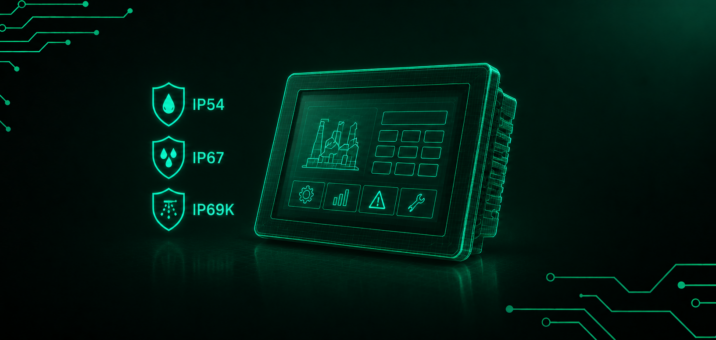
A high IP rating means real resistance to rain and humidity, not just a specification entry. UV resistance means materials retain their properties even after long-term exposure in very sunny regions of the world. Shock resistance translates into maintaining full functionality despite dynamic loads that are common in recreational aviation.
These parameters are not isolated features added at the end of the project. They are the result of a series of engineering decisions made during the design phase.
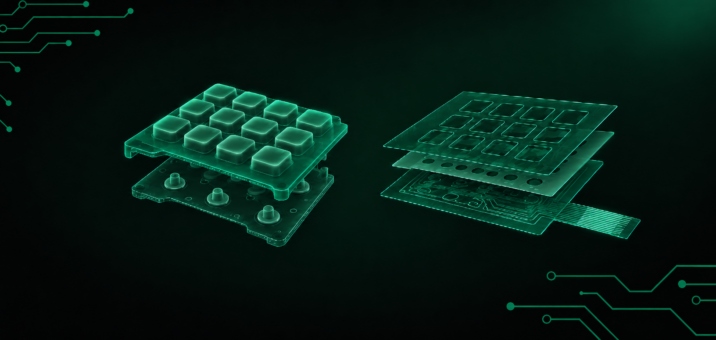
They include selecting appropriate films and layers, controlling bonding parameters, designing the proper flexibility of the entire structure, and verifying performance in durability and environmental tests.
Only the sum of these actions produces a stable, predictable device that operates reliably for years. And in paragliding instruments, that predictability is critical.
Qwerty technology that remains invisible
In paragliding, what people see are emotions and landscapes. Technology should remain transparent — working without drawing attention to itself.
If a pilot using Syride One, Syride XL, or Syride Evo V2 does not think about the button they press, the design has done its job.
If the device remains readable after years of sun exposure, the materials were chosen correctly. If after an intense flying season the equipment still works flawlessly, the construction was properly engineered.
At Qwerty we look at the keypad not as a detail but as part of a system that contributes to user safety.
And that is why in projects for the paragliding industry there is no room for compromise.
Technology may remain invisible.
Responsibility cannot.