Go back
  February 27 2026
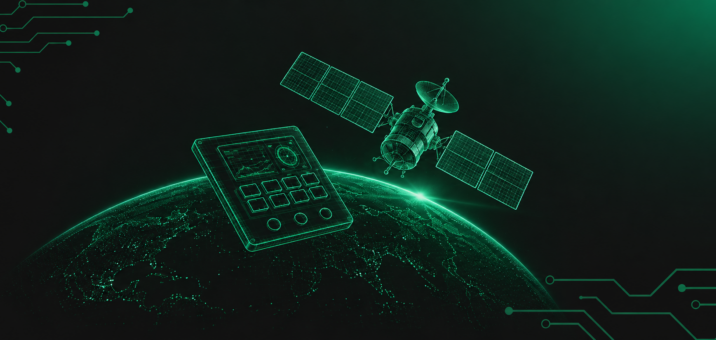
When in 2025 the Polish astronaut Sławosz Uznański-Wiśniewski conducts acoustic experiments aboard the International Space Station, one of the key elements of his equipment will be Svantek measuring instruments equipped with Qwerty membrane keyboards. This marks another chapter in the history of our products, which for years have supported the most demanding technological projects on Earth and beyond.
What challenges must keyboards face in space?
Space imposes requirements on electronic equipment that exceed the capabilities of most standard solutions. During rocket launch, devices must withstand extremely high levels of vibration and noise – the Saturn V generated around 204.7 dB, corresponding to forces that can literally shatter inadequately protected equipment.
On the International Space Station, the constant background noise level is around 72 dBA, generated by hundreds of life-support systems in operation. In such conditions, every element of the user interface must work reliably for months or even years of intensive use.
In addition, outer space is an atmosphere-free environment where extreme temperatures, cosmic radiation, and vacuum test the durability of every material. A keyboard failure in such conditions may result in the loss of control over critical measurement equipment.
Advanced Qwerty solutions for space applications
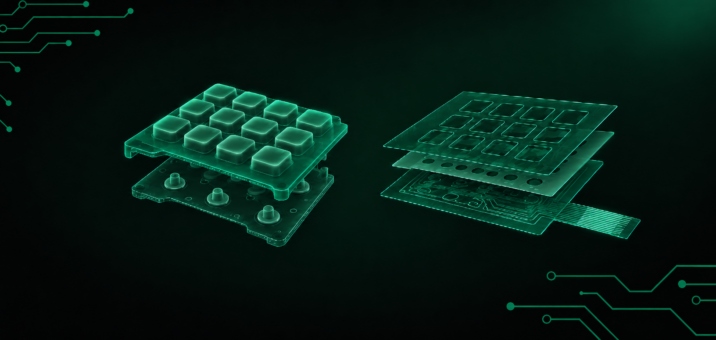
Our membrane keyboards used in Svantek devices are the result of three and a half decades of technological development. Their exceptional durability is based on high-quality polyester and polycarbonate films that retain flexibility and functionality even under extreme temperature and humidity conditions.
EMI/ESD shielding technology plays a fundamental role here. On the space station there are hundreds of electronic devices that can generate electromagnetic interference. Our keyboards are equipped with advanced protection systems against such interference and electrostatic discharge, ensuring stable operation even in highly saturated electronic environments.
Optical bonding is another technology that makes our keyboards suitable for space applications. Permanent bonding of layers eliminates air gaps between components, significantly increasing mechanical strength and improving optical parameters. In vacuum conditions, where standard bonding methods may fail, this technology ensures long-term reliability.
Practical use in space missions
Svantek measuring devices – the SV 104A personal noise dosimeter and the SV 971A sound level meter – equipped with our keyboards will record acoustic parameters on the ISS 24 hours a day. Astronauts must be certain that every key press is correctly registered, even during intensive experiments or emergency situations.
A key element of the mission is Bluetooth data transmission to the EveryWear app on astronauts’ iPads. Our keyboards must ensure reliable control of medical data transmission processes, where any error may result in the loss of valuable scientific information.
This is not the first space mission involving our keyboards – already in 2022 they were present on the Chinese space station, where a taikonaut used a device equipped with our interface. Each such deployment provides us with valuable insights into how our products perform under real space operating conditions.
How do space experiences influence the development of Qwerty technology?
Our experience with space projects also translates into the development of terrestrial applications. Technologies proven in space return to our standard products, raising their quality and reliability. It’s a natural process – if a keyboard works in orbit, it will certainly work in any industrial environment on Earth.
Each space mission is also a valuable lesson for our engineers. Feedback from astronauts and Svantek specialists helps us develop subsequent generations of interfaces, even better adapted to extreme working conditions.
Space is the ultimate quality test – our keyboards have passed it, proving that Polish Qwerty technologies can support the most advanced scientific projects in the world.