Go back
  April 27 2026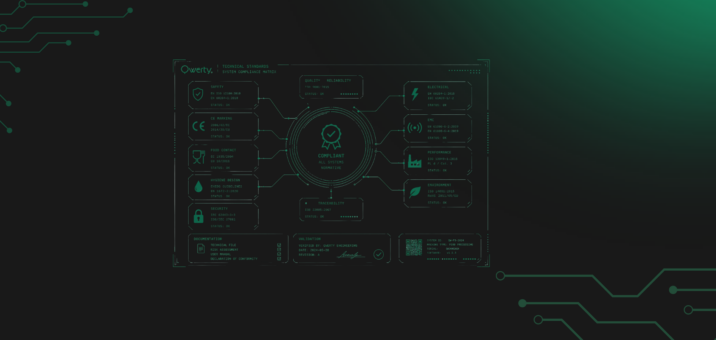
A control panel in a CNC machine is the interface between a human and a process that demands repeatability and control. The operator changes parameters, makes adjustments, and responds to alarms. Everything happens quickly, often in noise and while wearing protective gloves. In such conditions, the interface cannot be merely “good enough.” It must be designed precisely for that environment.
The difference between an office panel and an industrial one is not just about a thicker enclosure. It is about how materials react to coolant, how contacts behave after a million cycles, and whether the graphics remain legible after a year of cleaning with aggressive chemicals.
The working environment is not neutral
Around a machine tool, coolant emulsions circulate, dust settles, and vibrations are a constant background. The control panel is regularly wiped – often quickly and without care. If the design does not account for these realities, wear appears faster than expected.
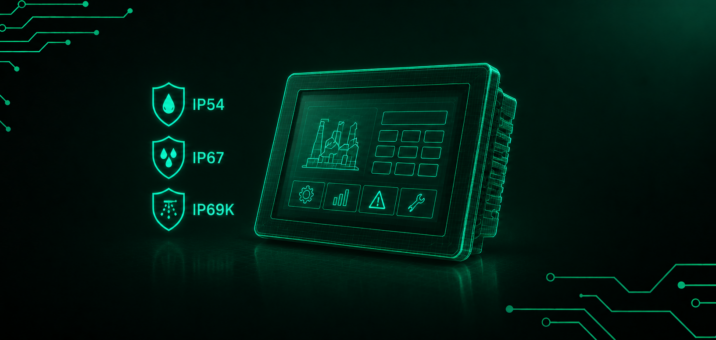
The most common problems do not result from a single spill or impact. They start with small, repeated stresses: microcracks in the front layer, gradual loss of print adhesion, moisture penetrating gaps. That is why a CNC panel should be designed with high sealing performance and a front material resistant to oils, detergents, and temperature.
This is not about aesthetics. If process fluid reaches the conductive layers, button response becomes unpredictable. And in a production environment, predictability is fundamental.
Button response as a process safety factor
A CNC operator does not analyze every press. They act intuitively, often repeating the same sequences. If a button starts responding inconsistently – sometimes softer, sometimes harder, or without a clear actuation point – the risk of error increases.
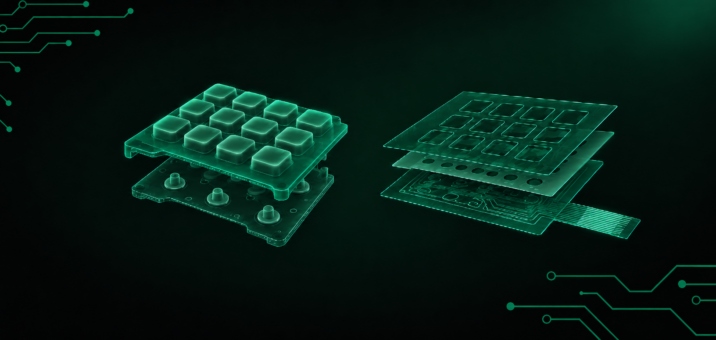
A well-designed industrial keyboard maintains consistent characteristics over time. Actuation force, activation point, and tactile feedback should remain stable regardless of temperature and cycle count. In practice, this requires properly selected contact elements and a design that does not degrade with material aging.
This is especially important for critical functions: emergency stop, alarm acknowledgment, or tool parameter changes. In such areas, the interface cannot be open to misinterpretation.
Graphics and readability – durability over appearance
In a brochure, every panel looks good. The reality of a production floor quickly verifies print quality. If symbols begin to wear off or contrast decreases due to cleaning, the operator loses orientation. This increases reaction time and cognitive load.
Graphic design in a CNC panel should be function-driven. The most important information must be readable from a distance, and the key layout should be logical. Clear grouping of functions is often used – axis movements, corrections, alarms – so the user does not have to “search” for commands.
If the panel is backlit, another factor comes into play: light uniformity and long-term material stability. Uneven illumination or yellowing of the front layer are issues that typically appear only after months of use.
Electromagnetic interference – the silent adversary
CNC machines operate with drives and inverters that generate electromagnetic interference. The control panel must be resistant to it. False signals or unintended keyboard responses are unacceptable in a production environment.
That is why signal routing, separation, and proper shielding are considered already at the design stage. This is a part of the construction that is not visible, but directly affects operational stability.
Ergonomics means fewer errors, not “more comfort”
In CNC applications, ergonomics does not mean comfort in the everyday sense. It means reducing errors. Operators often work in gloves and under time pressure. Buttons must have the right size, clear spacing, and logical arrangement.
A well-designed panel allows machine operation without thinking about function locations. This reduces reaction time and cognitive load – especially in alarm situations.
Where does expertise come into play?
From our perspective at Qwerty, expertise does not begin with graphic design or a material catalog. It begins with understanding the working environment. Before deciding on panel construction, the context must be analyzed: what coolants it will encounter, how often the front is cleaned, how many cycles the buttons will undergo annually, and which safety standards apply.
These questions are not formalities. They structure the entire design process. A panel for a single-shift machine is designed differently than one for a 24/7 production line. Requirements differ for aluminum machining versus stainless steel, where the environment may be more chemically aggressive.
At Qwerty, we view the control panel as part of a system, not a standalone product. This means analyzing:
- environmental and cleaning conditions
- mechanical loads and cycle counts
- risk of electromagnetic interference
- regulatory and safety requirements
Only then are front materials, contact design, lamination methods, and electronics integration selected. This is not a process based on the assumption that “an industrial panel can withstand anything.” It is a process where every parameter has a justification.
From experience, most problems do not come from obvious mistakes, but from underestimating operating conditions. A panel may look robust, but if it has not been tested against real chemical, mechanical, and thermal stresses, the risk of failure increases over time.
In CNC machines, the control panel is responsible for process continuity. When it works correctly for years, no one thinks about it. And that is exactly how we define a well-designed solution: as a component that does not draw attention to itself, because it simply works.