Go back
  February 23 2026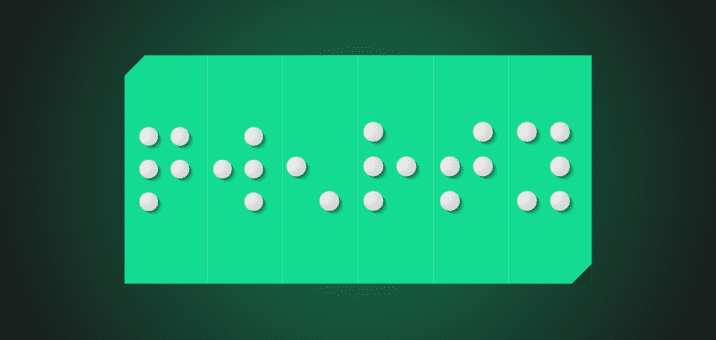
Universal Design and Interface Accessibility
Universal design and interface accessibility are integral elements of a modern approach to device development. One of the most important aspects of this accessibility is addressing the needs of visually impaired users through the implementation of Braille. At Qwerty, we also support device manufacturers who want to make their products more accessible to all users.
Polyester Forming Technology – The Secret of Raised Markings
In the production of Braille markings, we use an advanced polyester foil embossing process that allows us to create raised dots with precise parameters. The choice of polyester foil as the base material is deliberate – it offers exceptional durability, resistance to mechanical damage, and retains its properties under varying operating conditions.
The technological process must ensure accurate reproduction of all Braille parameters:
- correct height of the raised dots;
- precise spacing according to standards;
- uniform dot diameter;
- durability of the embossing even under intensive use.
Our production equipment ensures parameter consistency in series production, which is especially important for large orders for public transport or hospital systems.
Certification Challenge and Expert Collaboration
One unexpected challenge we faced in 2017 was certification. The client requested a document confirming the correct implementation of Braille markings, which required us to verify the applicable standards. To our surprise, at that time, there were no unified standards in Poland or the European Union.
The solution was collaboration with the Polish Association of the Blind (PZN), which has the competence to assess and certify such markings. The verification process includes:
- Assessing dot readability for visually impaired users;
- Checking the height and spacing of tactile elements;
- Verifying the durability of markings;
- Analyzing overall interface ergonomics.
Obtaining a PZN certificate confirms that our products are functional for visually impaired users and comply with all requirements for correct Braille representation.
From Parking Meters to Audiobooks – Everyday Applications
Qwerty solutions with Braille are applied in many areas where interface accessibility is crucial:
Parking Systems – Our keyboards in city parking meters allow visually impaired users to make payments independently. Raised markings facilitate navigation and easy data entry.
Public Transport – In railway rolling stock, we produce markings for passenger area elements such as “waste bin” or “water release.” Durability is critical due to heavy usage.
Medical Applications – In hospitals, keyboards with “call nurse” buttons allow visually impaired patients to request assistance independently. Materials used in these products must withstand disinfectants and frequent cleaning.
Specialized Devices for the Visually Impaired – One of the most inspiring projects we participated in was “CZYTAK,” a device for playing audiobooks for visually impaired users. The Braille keyboard is a key interface element enabling intuitive navigation and control.
Ensuring Durability of Braille Keyboards
When designing Braille markings, durability is as important as precision. Our solutions must meet challenges such as:
- Wear resistance – dots remain legible after thousands of touches;
- Material stability – polyester foil maintains mechanical properties at varying temperatures;
- Resistance to moisture and chemicals – especially important in hospitals and public spaces;
- Integration with the substrate – preventing detachment or mechanical damage.
Our rigorous quality control process includes tests simulating accelerated wear, exposure to variable weather conditions, and resistance to chemicals the interface may contact during normal use.
Discover Qwerty’s Inclusive Solutions
Braille markings are not only an accessibility feature but a tool supporting the independence of visually impaired users in everyday life. At Qwerty, through advanced polyester embossing technology and collaboration with experts from the Polish Association of the Blind, we deliver solutions that combine precision, durability, and functionality.
Our products are used in parking meters, trains, hospitals, and specialized devices for visually impaired users, contributing to a more accessible environment. This is another example of how our expertise and technical knowledge allow us to address universal design challenges and provide solutions that genuinely improve users’ quality of life.