Go back
  July 15 2026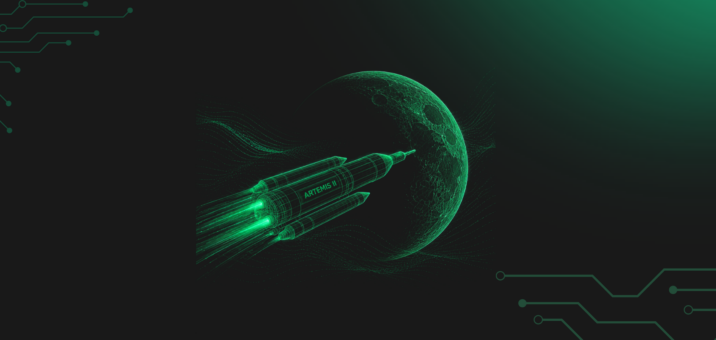
April 2026, the Orion spacecraft disappears behind the far side of the Moon. For several dozen minutes, communication with Houston stops entirely, yet systems including optical navigation, life support, and acoustic monitoring of the capsule’s interior keep working autonomously. The interface for that last system is a membrane panel. It’s a reminder of a principle that applies just as strictly on an offshore drilling platform, in the clean room of a semiconductor fab, and on a production line running continuously – reliability is decided at the level of a component whose role seems marginal right up until the moment it fails.
Environments that don’t forgive
Space isn’t the only place where servicing during operation simply isn’t an option. Offshore drilling platforms, submarines, installations in ATEX zones (environments at risk of explosion) – in every one of these, a component has to work correctly from the very first activation and keep running through its entire intended service life without intervention.
In a lab, you can repeat a test, but not in orbit, underwater, or in the middle of a production campaign. An operational environment, unlike a controlled one, doesn’t give you a second chance, which is why a component’s reliability has to be verified under the same conditions it’s meant to work in.
Sound as an early warning system
Every mechanical system generates a characteristic sound profile – its so-called acoustic signature. Pumps, fans, cooling systems: all of them have one. When that signature changes, something is starting to degrade.
On the International Space Station, acoustic monitoring serves exactly that function. The system compares the station’s current sound profile against a baseline and detects anomalies before they turn into a failure. A clogged filter shows up as an increase in noise level, bearing degradation shifts the frequency spectrum, and a leak generates a signal in the ultrasonic band. Acoustic analysis makes it possible to pinpoint exactly which piece of equipment needs attention. Sound monitoring in this context goes far beyond protecting the crew’s hearing, since it also functions as predictive diagnostics and makes it possible to anticipate a failure before it happens.
On the ISS, the constant hum produced by the life-support systems hovers around 72 dBA (a noise-level unit that accounts for the sensitivity of the human ear – for comparison, normal conversation runs at about 60 dBA). That value marks the threshold above which NASA requires astronauts to wear hearing protection.
In orbit, this level also serves as a diagnostic baseline. When the background noise rises, something is changing. When it drops after an intervention, the system has returned to normal. The same noise sources – pumps, fans, thermal systems – run continuously, generating acoustic load around the clock. In an environment you can’t step out of, managing that load becomes a condition for safe operation.
A secondary part can decide the outcome of a mission
The history of spaceflight offers well-documented cases where the failure of a seemingly secondary component had serious consequences.
On the Hubble Space Telescope, an optocoupler (a component that transfers an optical signal between circuits) proved vulnerable to cosmic radiation – the result was a recurring paralysis of observations over the South Atlantic.
During the SMAP mission, a MOSFET transistor (a voltage-controlled electronic switch) suffered gate rupture caused by radiation – the primary science instrument was lost.
Artemis II carried a four-person crew on a figure-eight trajectory around the Moon. The flight lasted nine days, and at its peak, Gregory “Reid” Wiseman, Victor Glover, Christina Koch, and Jeremy Hansen were 406,778 km from Earth – farther from Earth than any human beings in history.
The mission had its share of problems: valve malfunctions, interruptions in audio communication, issues with the sanitation system – none of these failures ended the flight, but each required the crew to intervene under conditions where the margin for error is minimal.
From an engineering standpoint, the essential point of this mission was the fact that behind the far side of the Moon, the Orion capsule briefly lost contact with Earth, so navigation, life support, acoustic monitoring, and every other system had to operate autonomously. During that phase of the flight, only what had been designed, tested, and installed before launch existed at all.
Among the systems tested during the mission was measurement equipment from Svantek – the SV 102A+ acoustic dosimeter (a device that measures noise level and noise dose), monitoring the sound conditions inside the capsule. The user interface for this instrument is a membrane panel.
Designing for conditions where there’s no fixing it later
The best measurement equipment loses its value if the operator can’t work it. The membrane panel on the acoustic dosimeter is what connects the human being to the data that station diagnostics and crew safety depend on. The legibility of the markings, the tactile feedback of the actuation point (the moment a button confirms it’s been pressed), resistance to millions of mechanical cycles under microgravity – each of these parameters determines the usability of the entire system.
A panel that loses print contrast or shifts its actuation force after thousands of activations stops being a reliable interface, and a system without a reliable interface becomes a system you can’t trust. That’s why the principle of “design for zero maintenance” (designing to eliminate the need for servicing during operation) applies not only in space, but anywhere replacing a component mid-operation is impossible or simply not economical.
For an interface manufacturer, that translates into concrete obligations: selecting materials for the target conditions, testing in the actual operating environment, anticipating degradation across the full service life, and controlling the production process at every stage – from graphic design through lamination and cutting. In a brochure, every panel looks the same, but the difference shows up after a year, after five years, after a million cycles – or after nine days beyond the Moon’s orbit.
The quiet contribution of Polish engineering to space programs
The presence of Polish technology in space programs isn’t incidental. Svantek has been supplying NASA with acoustic monitoring equipment for the ISS and the Tiangong station for over a decade. The Space Research Centre of the Polish Academy of Sciences builds scientific instruments for ESA missions. Creotech Instruments is building Poland’s first industrial satellite. Sener Polska designs solar panel deployment mechanisms. The POLON telescope network supported orbit tracking during the Artemis II mission.
It’s an ecosystem of expertise in which component suppliers – interface manufacturers among them – occupy a specific, high-stakes place. Every element in that chain has to meet the same reliability requirements as the system it’s part of.
Reliability starts before launch
At Qwerty, we look at an interface as part of a system, not as a separate product line. The membrane panel that flew aboard the Artemis II mission as part of the Svantek SV 102A+ dosimeter was built through the same process and according to the same design philosophy as the solutions we supply to industry.
On every project, we analyze:
- the operating environment and the product’s intended service life,
- the requirements for mechanical and chemical resistance,
- thermal conditions and their effect on print durability,
- the required actuation force and its stability over time,
- the legibility of markings after years of intensive use.
The result is an interface that behaves predictably – whether it’s working on a production floor, aboard a marine vessel, or 400,000 kilometers from the nearest service technician.
The Orion capsule returned to Earth after nine days. The membrane panel worked, the acoustic monitoring delivered its data, and the crew landed safely. The interface’s reliability was confirmed long before that, at the stage of process design, material selection, and the technical decisions made before the panel ever left the production line. And that’s exactly why we prefer to make those decisions ourselves.