Go back
  February 16 2026
Modern industrial production is based on advanced technologies that control manufacturing processes, monitor parameters, and optimize machine operation. To efficiently manage such complex systems, appropriate communication tools between humans and machines are essential – namely HMI systems. Understanding how they work and what potential they offer is crucial for everyone involved in industrial automation or planning to modernize their machine park. In this article, we explain what HMI interfaces really are and how our keyboards and touch panels support their implementation.
What Is HMI?
Human Machine Interface (HMI) is a system that enables communication between a user and a machine or industrial process. Its role is to translate operator actions into specific machine commands and to present data from the device in a form that is understandable to humans.
HMI interfaces are present in everyday life – in elevators, vending machines, and household appliances. However, their most advanced applications are found in industry, where they enable control of complex production lines, monitoring of machine operation, and response to events in technological processes.
Modern HMI systems are much more than simple displays or control panels. They combine the following functions:
- real-time visualization of industrial processes;
- control of machines and entire production lines;
- monitoring of device operating parameters;
- alarming about irregularities and failures;
- collection and analysis of production data.
A well-designed HMI translates complex technological processes into a clear graphical form. The operator can see the current machine status, modify production parameters, and receive immediate feedback on any deviations from normal operation. This has a direct impact on production efficiency, early detection of potential problems, and workplace safety.
What Components Make Up an HMI?
An HMI system is a complex structure combining multiple hardware and software components. Each element plays a specific role in ensuring effective communication between humans and machines.
Operator Panel
The operator panel is the physical part of the interface that the user works with directly. It can take many forms – from simple membrane keyboards, through touch screens, to advanced control consoles. Its effectiveness depends on ergonomics and adaptation to the working environment. The panel must be readable under different lighting conditions, resistant to dirt and vibrations, and intuitive to operate.
Hardware Components
At the heart of an HMI system are hardware elements responsible for data processing and transmission – primarily industrial computers, controllers, and communication modules. Their design must meet strict industrial standards, including resistance to electromagnetic interference, thermal stability, and protection against dust and moisture.
Control Software
The software layer of an HMI interprets operator commands and translates them into machine instructions. Modern HMI software integrates with SCADA systems, databases, and analytical platforms, enabling not only machine control but also data collection and generation of production reports.
Communication Systems
Efficient data exchange between the interface and machines requires reliable communication protocols. Modern HMI systems use industrial standards such as Modbus, Profinet, and EtherCAT. These ensure fast and secure data transmission, often in real time, which is critical for production processes.
Types of HMI Interfaces
HMI interfaces come in various forms, adapted to specific needs and working conditions. Their complexity and functionality depend on the application – from simple devices to advanced control systems.
- Basic HMI interfaces – consist of buttons, LED indicators, and segment displays. They work well where simplicity and resistance to harsh environments are required, such as in production machines or industrial elevators.
- Touch screen HMIs – currently the standard solution in industrial automation. Touch screens offer intuitive operation and flexibility in presenting information, such as functional screens, process diagrams, and parameter trends.
- Advanced HMI systems – combine control, monitoring, and data analysis functions. They integrate with SCADA systems and databases, enabling comprehensive process control and reporting.
- Mobile HMIs – allow access to control systems via portable devices. Tablet and smartphone applications enable monitoring processes and responding to alarms from anywhere in the facility, which is especially valuable for maintenance teams.
Advantages of Human Machine Interface
HMI systems have transformed the way production processes are managed, improving the efficiency of both individual operators and entire teams. Their implementation brings benefits such as:
- Simplified operation of complex processes – graphical interfaces present complicated technological processes in an accessible form;
- Fast response to events – alarms, parameter statuses, and diagnostic messages enable quick reaction to irregularities;
- Production optimization – data collection and analysis help identify bottlenecks, monitor material and energy consumption, and plan maintenance;
- Flexibility and scalability – interface modifications or new functions can be added without interfering with the technological process itself.
Implementing HMI systems shortens the onboarding time for new employees, reduces downtime and failures, and improves overall production efficiency. These interfaces have become a standard in modern industrial plants.
Qwerty Membrane Keyboards and Touch Panels as HMI Components
HMI interfaces in industry require reliable components that enable precise interaction between operators and machines. At Qwerty, we specialize in manufacturing two key HMI components: membrane keyboards and touch panels, which form the physical communication layer between humans and industrial systems.
Our touch panels, equipped with optical bonding technology, ensure accurate transmission of commands to HMI systems. Eliminating air gaps between screen layers not only improves interface readability but also increases control precision – a crucial factor in industrial environments. Protective coatings and EMI/ESD shielding systems ensure stable operation of the entire control system.
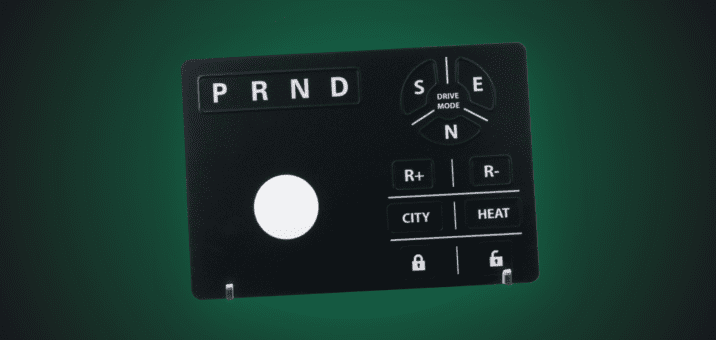
The membrane keyboards we manufacture are also an important element of HMI interfaces. Their design, based on high-quality polyester films with UV coating, ensures reliable operation in industrial process control. Thoughtful layout of functional keys and clear graphic markings make it easier to operate complex automation systems.
When designing HMI components, understanding the entire control system is essential. That is why each implementation is preceded by a detailed analysis of the process specifics and technical requirements. This allows us to create panels and keyboards that effectively integrate with other HMI system components, giving operators full control over the production process.