Go back
  February 17 2026
 Modern cryotherapy today looks like a simple procedure.
A few minutes of treatment, precise application of cold, and the patient quickly returns to everyday activities. Yet behind this apparent simplicity lies advanced technology and many years of experience from the companies that co-create it. One example of such cooperation is the nearly three-decade-long partnership between Qwerty and Metrum Cryoflex – a Polish manufacturer of cryotherapy and cryosurgery equipment, present in medical practices in Poland and in more than 50 countries worldwide.
It is in this context that it is worth looking behind the scenes of devices used in aesthetic medicine and physiotherapy – where precise user interface components have a real impact on the quality of therapy.
Cryotherapy: precision that leaves no room for error
Cryotherapy is based on the controlled application of low temperatures to tissues. In cryosurgery, this means local freezing of skin lesions; in physiotherapy – reducing pain, swelling, and inflammation. In both cases, repeatability of parameters and full control over the course of the procedure are crucial.
For doctors and therapists, the device must be a predictable tool. Every change of settings should be fast, clear, and unambiguous. This is where the role of components begins – often invisible to patients, yet decisive for the specialist’s comfort of work.
A technological partnership, not a coincidence
The cooperation between Qwerty and Metrum Cryoflex is not a one-off project, but a long-term process of improving solutions used in medical equipment. Over the years, a shared approach to quality, ergonomics, and reliability of interface components has been developed for devices used in cryosurgery, physiotherapy, and rehabilitation.
Thanks to this technological background, it is possible to design components tailored to real working conditions in clinics and medical practices.
An interface that works together with the physician
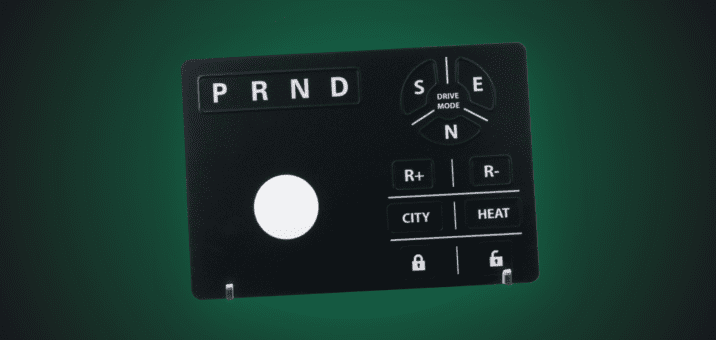
Control panels in medical devices cannot be a compromise between aesthetics and functionality. They must combine both, while meeting strict hygiene and usability requirements. In practice, this means a set of solutions with one goal: to give the physician full control of the device without distracting attention from the patient.
Front plates and panels organize the visual communication of the device. They ensure clear labeling of functions, parameters, and operating modes, allowing intuitive navigation of the interface. In aesthetic medicine and cryotherapy, quick recognition of settings reduces the risk of errors and shortens preparation time.
Membrane overlays act as the protective “skin” of the device. They must withstand intensive cleaning and disinfectants, while maintaining an aesthetic appearance for years. This requires materials that do not become matte, crack, or lose readability even under daily, intensive clinical use.
Membrane keyboards provide fast and unambiguous control of the device. Each press must give clear feedback, even when the physician works with protective gloves. A well-designed keyboard reduces the number of movements needed to change settings and maintains workflow during procedures.
Custom illuminated knobs enable precise adjustment of key therapy parameters. Their shape and resistance are adapted to medical work, and backlighting allows quick reading of settings even in low-light conditions. This combines tactile control with immediate visual feedback.
These details determine whether a device becomes a natural extension of the physician’s hand – shortening reaction time, reducing cognitive load, and minimizing the risk of mistakes during procedures.
Devices known from clinical practice
Such solutions are used in Metrum Cryoflex devices applied in various therapeutic fields. In cryosurgery, these include CRYO-S Mini and CRYO-S Electric II for precise local freezing of skin lesions. In such procedures, physicians focus on the patient, not on “fighting” the device interface.
In physiotherapy and rehabilitation, where cryotherapy supports regenerative processes, devices such as CRYO-T Duo, CRYO-T Elephant Mini, and the BOA Max 2 system are used. Here, quick access to therapy programs and ergonomics matter, especially when working with many patients daily.
Why components have a real impact on therapy
In medicine, there is no room for “good enough” solutions. Cryotherapy devices must work precisely not only during the first procedures, but also after years of intensive use. Reliability always comes down to the smallest elements – those the physician operates directly during therapy.
Designing components for cryotherapy means meeting several criteria at once: durability, hygiene, ergonomics, and precision. Each of these directly affects patient safety and therapy effectiveness.
Technology the patient never sees
Cryotherapy uses the power of cold, but its effectiveness depends not only on temperature, but on how precisely it can be controlled. For the patient, the procedure lasts only minutes. For the physician, it is a process requiring full control at every stage.
Behind every successful procedure stands thoughtful device design and refined interface components that enable fast, confident operation without unnecessary distraction. Well-designed technology “disappears” during work – it supports the user exactly where needed.
Long-term cooperation with Metrum Cryoflex is more than project delivery for us. It confirms our competencies in a field with exceptionally high quality and responsibility standards. In aesthetic and therapeutic medicine, repeatability, reliability, and precision are non-negotiable values.