Go back
  March 18 2025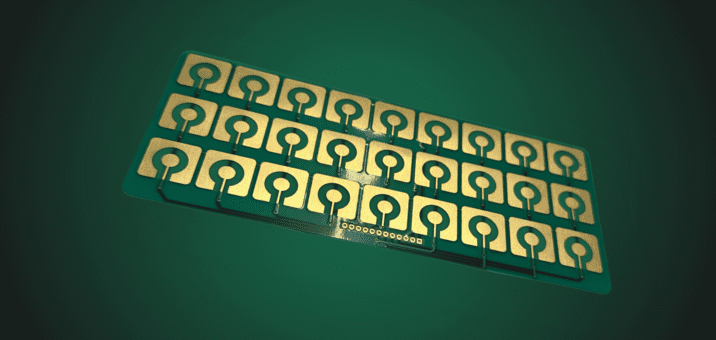
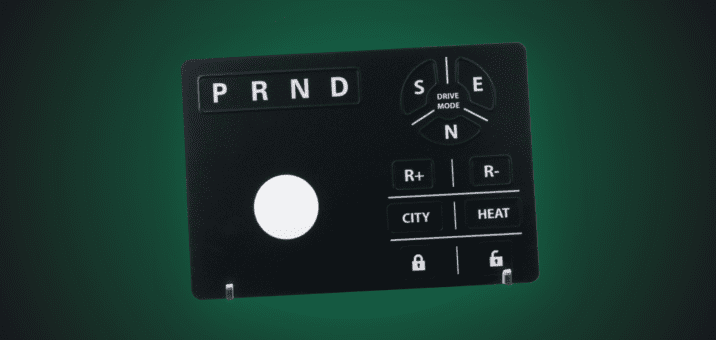
PCB membrane switches are an advanced technical solution that combines the functionality of traditional membrane switches with the capabilities of PCBs (Printed Circuit Boards). As a manufacturer of specialized interfaces for industrial and medical applications, we see a growing demand for these components, especially in diagnostic devices and industrial automation systems.
In this article, we will talk about the principles of operation and technology of PCB membrane switches. These inconspicuous components have become a standard where control precision, space-saving, and resistance to harsh working conditions are important.
Construction and Operation of Membrane Switches
Membrane switches are advanced user interfaces with a flat design that operate on the principle of closing an electrical circuit with pressure. They are used in control panels of medical equipment, industrial equipment, and advanced measuring devices.
At the Qwerty laboratory, membrane switches use a combination of durable polymers, conductive materials, and effective insulators. An outer polycarbonate or polyester film protects the internal components and bears precision-made prints that remain legible through years of use. The central part of the design is made of layers of conductive materials responsible for transmitting the signal when the switch is pressed and specialized insulation materials between them that eliminate the risk of accidental activation. The mechanical stability of the entire design is ensured by the base layer, which protects the system from deformation even under intensive use.
PCBs (Printed Circuit Boards) are the foundation of all modern electronic devices. This seemingly simple component makes it possible to:
● Combine various electronic components (resistors, capacitors, diodes, transistors) into a single unit.
● Minimize space with multilayer structures.
● Facilitate the mass production process of electronics through standardization.
● Ensure the durability and stability of electronic connections.
In the electronics manufacturing process, PCBs act as an integration platform – precisely delineated conductive traces connect individual components into a coherent electronic circuit. Multilayer technology makes it possible to reduce the size of devices significantly while maintaining error-free connections.
PCB Membrane Switches – How Do the Two Technologies Work Together?
Combining membrane keys with PCBs creates an advanced user interface that surpasses the capabilities of traditional solutions. There are various methods of integrating these technologies to suit specific requirements.
The basic method is to mount the membrane switches directly on the PCB. A significant improvement is the transfer of conductive traces from the membrane layer directly to the PCB. The elimination of flexible conductive films results in significant technical advantages:
● Mechanical durability – PCBs, unlike flexible films, maintain dimensional stability even under heavy use. The rigid design effectively protects the conductive traces from micro-cracks that can occur in traditional membrane switches.
● Precision of operation – conductive traces made with PCB technology have much higher accuracy than those applied to flexible materials. This results in more stable electrical parameters and more predictable interface performance.
● Integration possibilities – PCB technology allows the implementation of additional functions within a single circuit. It becomes possible to integrate LED backlighting, capacitive sensors, or microcontrollers while maintaining the compact dimensions of the entire module.
● Simplifying the design – moving the conductive traces to the PCB reduces the number of layers in the membrane switch. This not only results in improved reliability but also simplifies the manufacturing and assembly process.
Advantages of PCB Membrane Switches
The combination of membrane technology and PCBs has created a solution that significantly outperforms traditional user interfaces and is distinguished by its many advantages.
Precision and Problem-Free Operation
PCB membrane switches are distinguished by exceptional pressure registration accuracy. The carefully engineered design ensures an immediate response to each press while maintaining a constant activation force. These features make the technology ideal for medical devices, aerospace control systems, and advanced industrial automation.
The PCB membrane switch design features an extremely low profile. Direct integration into the PCB eliminates the need for additional mounting components, allowing compact devices to be designed without compromising on functionality. This is particularly important in portable diagnostic devices and control panels.
Resistance to Industrial Conditions
PCB membrane technology works well in challenging industrial environments. The watertight design protects electronics from moisture and dust, and special protective coatings ensure resistance to chemicals. Switches retain full functionality even under heavy use in difficult environments.
PCB membrane switches offer a wide range of customization options for specific applications:
● Custom-designed user interface graphics.
● Integrated LED backlighting for improved readability.
● Ability to apply haptic functions and touch sensors.
● Direct connection to control systems.
Simple Integration With Devices
PCB membrane switches are distinguished by their simplicity of implementation in electronic systems. Their modular design and compliance with industry standards simplify the device design and assembly process. Direct connection to the main PCB eliminates the need for additional intermediary components, which results in higher operation stability of the entire system.
The durability of the design and resistance to mechanical damage make these interfaces practically not need regular maintenance. This translates into lower operating costs and longer,problem-free operation.
New Dimension of Precision With PCB Membrane Switches
PCB membrane switch technology proves that it is possible to successfully combine seemingly contradictory requirements – high precision with durability, compact size with advanced functionality, and ease of use with problem-free operation. This innovative design yields solutions that are ideal for industry, automation, or medical applications.
At Qwerty, we specialize in designing and manufacturing membrane switches that meet the highest quality standards. Our solutions are used wherever control precision must go hand in hand with resistance to difficult operating conditions. Multilayered design, the use of high-quality materials, and advanced manufacturing processes allow us to manufacture user interfaces that not only meet but often exceed customer expectations.