Go back
  February 12 2026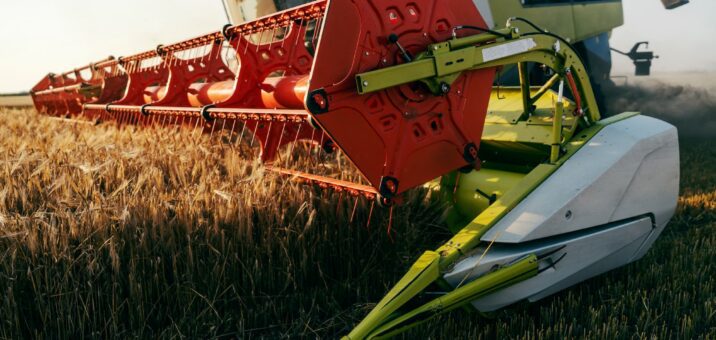
Agriculture Is Undergoing a Technological Transformation
Agriculture is currently experiencing a profound technological transformation that is fundamentally changing the way farms operate. Modern technical solutions are revolutionizing cultivation methods, harvesting, and resource management. Thanks to precision farming systems, automation, IoT sensors, and artificial intelligence, farmers can achieve better results with fewer inputs. These innovations not only increase agricultural productivity but also support sustainable development and environmental protection.
Precision Agriculture – The Key to Crop Optimization
Precision agriculture is an innovative farm management method based on detailed data collected directly from fields. It involves dividing farmland into smaller sectors that are continuously monitored for key parameters such as soil quality, moisture levels, pest presence, and crop condition. The main objective is to maximize yields while optimizing resource use.
Precision agriculture uses advanced technologies such as:
GPS and GIS systems – enable accurate positioning of agricultural machinery and the creation of soil variability maps, optimizing routes and fertilization planning.
Sensors and measurement stations – monitor soil moisture, temperature, composition, and weather conditions, providing real-time data for quick response.
Drones and satellite imaging – assess crop health, detect diseases and pests, and support spray planning through detailed aerial imagery.
Variable Rate Technology (VRT) – automatically adjusts fertilizer and input application rates according to specific field zones.
Precise input application reduces operational costs and increases yields while significantly decreasing water and chemical use. This approach optimizes resources and reduces environmental impact, supporting sustainable agricultural development.
Internet of Things in Precision Agriculture
The Internet of Things integrates smart devices and sensors across farmland, enabling continuous real-time data collection and analysis.
Advanced sensors monitor soil moisture, temperature, sunlight exposure, and nutrient levels. Data is transmitted to a central management system that generates irrigation, fertilization, and crop protection recommendations.
Through mobile applications, farmers can remotely manage operations, monitor crop conditions, control irrigation systems, and receive alerts about threats such as drought or plant diseases.
Automation of Agricultural Machinery
Automation enables fieldwork without constant operator presence. Using GPS, sensors, and intelligent software, modern tractors and harvesters operate autonomously, increasing efficiency and reducing operational costs.
Autonomous machines follow designated routes, avoid obstacles, and optimize fuel consumption. GPS eliminates overlapping passes, improving accuracy in seeding, plowing, and fertilizing.
Remote-control systems allow farmers to monitor and manage machinery in real time via mobile apps, enabling quick adaptation to changing weather conditions.
Artificial Intelligence in Agriculture
AI processes data from sensors, drones, and satellites in real time, supporting informed decision-making.
AI algorithms analyze historical and current data (weather conditions, soil parameters, crop status) to forecast yields and determine optimal planting and harvesting times. AI also optimizes irrigation and fertilization and detects diseases and pests through image analysis.
Smart Irrigation Systems
Modern irrigation systems use sensor networks to monitor soil moisture and temperature, automatically adjusting water delivery to plant needs. This ensures significant water savings and prevents over- or under-irrigation.
Such systems are used in open fields, greenhouses, and orchards, particularly valuable in water-scarce regions.
Robotics in Modern Agriculture
Robotics replaces manual labor in precision-demanding tasks. Harvesting robots equipped with vision systems and AI identify and pick ripe produce without damage, operating continuously to reduce labor costs.
Robots also support crop care and irrigation, precisely adjusting water and plant protection inputs while detecting health issues through continuous monitoring.
Biotechnology in Crop Production
Biotechnology drives innovation in plant breeding. Advanced genetic modification techniques enable the development of crop varieties adapted to climate change and increasing food demand.
CRISPR-Cas9 gene editing allows precise DNA modifications, producing crops with higher yields, disease resistance, and longer shelf life.
Biotechnologically modified plants resistant to drought, frost, and soil salinity improve food security and production stability.
Innovations in Livestock Farming
Modern technologies enhance livestock production through automation and monitoring systems that improve efficiency and animal welfare.
IoT-based feeding systems precisely distribute feed according to individual animal needs. Sensors and cameras continuously monitor herd activity, detecting early signs of disease or stress and enabling quick intervention.
Technologies Supporting Sustainable Agriculture
Agriculture is evolving toward environmentally friendly practices by integrating renewable energy sources such as solar panels, wind turbines, and biogas systems.
Regenerative agriculture methods — reduced tillage, organic fertilizers, and cover crops — protect soil from erosion and improve long-term fertility while maintaining productivity.
The Future of Agriculture – Toward Intelligent Food Production
Technological transformation combines traditional farming practices with innovative solutions.
AI, robotics, and IoT make farming more precise, efficient, and environmentally sustainable. In the face of climate change and population growth, investing in agricultural technology is essential for future food security.
How Qwerty Industrial Keyboards Support Modern Agriculture
Agricultural transformation requires reliable control interfaces capable of operating in harsh environments — from grain silo dust to greenhouse humidity.
Our membrane and foil keyboards form the foundation of control systems in modern farms, enabling precise operation of machinery, irrigation systems, and automated production processes.
Developed in our research laboratory, Qwerty keyboards are resistant to extreme weather, dust, and chemicals. With IP68-rated sealing and advanced protective coatings, they operate reliably in combine cabins and greenhouse control rooms alike.
As a leader in industrial interfaces, we provide seamless integration with IoT and agricultural automation systems. Programmable functions, adaptive LED backlighting, and precision touch sensors make our keyboards ideal for complex agricultural operations.
Years of cooperation with leading agricultural machinery manufacturers have allowed us to develop interfaces perfectly tailored to modern farming needs.