Go back
  December 22 2025
 Imagine an operating room where every surface must be perfectly sterile, and touching a traditional button could transfer dangerous bacteria. This is precisely why modern medicine increasingly relies on glass panels—touch-based control interfaces that replace classic keyboards and mechanical buttons in medical equipment. It is a solution that combines hygiene, durability, and functionality. But what exactly are these components, and why have they become a standard in hospitals worldwide?
Why Does Glass Perform So Well in Medical Environments?
Tempered glass used in medical interfaces is far from ordinary window glass. It is a precisely engineered material that undergoes special thermal or chemical treatment, making it up to five times stronger than standard glass. In practice, this means it can withstand intensive cleaning with disinfectants several times a day for years—without scratches, discoloration, or loss of transparency.
The greatest advantage of glass in medical environments is its surface—perfectly smooth, without pores or microcracks. This is a clear contrast to plastic materials. While plastics develop microscopic irregularities that are ideal breeding grounds for bacteria, glass remains completely non-porous. Microbiological studies confirm that bacteria cannot easily survive or multiply on glass surfaces.
Another practical advantage is chemical resistance. Alcohol, chlorine, hydrogen peroxide—all aggressive disinfectants that gradually degrade plastics and rubber—have virtually no effect on glass. After a year of intensive use, a glass panel looks the same as it did on day one.
Durability is also worth mentioning. While traditional mechanical buttons wear out after hundreds of thousands of presses and their labels fade due to frequent cleaning, glass panels remain unchanged. Symbols and markings printed beneath the glass layer are permanently protected—they cannot be rubbed off or scratched.
How Does Touch Technology Work in Medical Devices?
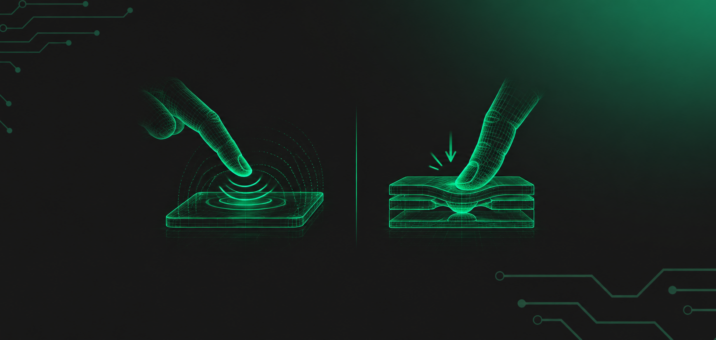
Modern glass panels used in medical equipment rely on advanced capacitive touch technology. The panel detects touch by sensing changes in the electromagnetic field, meaning there is no need to press—light contact is sufficient. This minimizes the transfer of bacteria and allows medical staff to operate devices comfortably while wearing gloves.
Importantly, the latest solutions can distinguish intentional touches from accidental ones, which is critical in hospital environments. A surgeon will not activate a function by accidentally brushing the panel with an elbow, and a nurse can safely clean the surface without triggering unwanted commands.
Many medical systems integrate glass panels using optical bonding technology—a permanent method of joining layers without leaving air gaps. This eliminates spaces where contaminants could accumulate and improves the readability of displayed information, even under challenging lighting conditions in operating rooms.
Protection Against Interference in an Electronics-Dense Environment
Modern operating theaters and intensive care units are true technological hubs. Dozens of electronic devices operate simultaneously, generating electromagnetic fields that can interfere with sensitive equipment. That is why professional glass panels are equipped with dedicated EMI/ESD shielding layers.
EMI (Electromagnetic Interference) shielding protects against electromagnetic disturbances that could affect data accuracy or touchscreen responsiveness. ESD (Electrostatic Discharge) protection neutralizes static discharges—the same ones that sometimes cause small shocks when removing a sweater. In medical environments, such discharges could not only disrupt device operation but, in extreme cases, damage sensitive electronics.
These protections are invisible to the user but essential for equipment reliability. When a patient’s life may depend on accurate readings of vital parameters, every layer of electronic protection is critical.
Daily Disinfection—Simple and Effective
Hospital protocols require regular disinfection of all surfaces. Traditional mechanical keyboards and button panels are a nightmare for sanitation teams—dozens of gaps where liquids, dust, and bacteria accumulate.
A glass panel offers a completely smooth surface without any recesses. The cleaning procedure is therefore extremely simple: spray the panel with a disinfectant and wipe it with a disposable cloth. There are no hidden corners where dirt can remain, no gaps between buttons where contaminants can build up. In practice, this solution saves time for staff while guaranteeing the highest hygiene standards.
Glass Interfaces—The Standard of Modern Medicine
Glass panels in medicine are a perfect example of how thoughtful engineering translates into real-world benefits—safer environments for patients, more convenient workflows for staff, and lower maintenance costs for healthcare facilities.
Technological development continues at a rapid pace. The latest solutions integrate glass panels with antibacterial systems—special coatings containing silver or copper ions actively eliminate microorganisms on the surface. Work is also underway on self-cleaning panels that use photocatalytic reactions.
Medical equipment manufacturers increasingly design entire workstations around glass touch interfaces—from vital signs monitors and hospital bed controls to comprehensive operating room management systems. At Qwerty, we also use glass panels in our medical-sector solutions, combining advanced printing technologies with the stringent requirements of hospital environments.